Visual character
Review base tone, movement, contrast and how much variation suits the collection.
Natural stone library
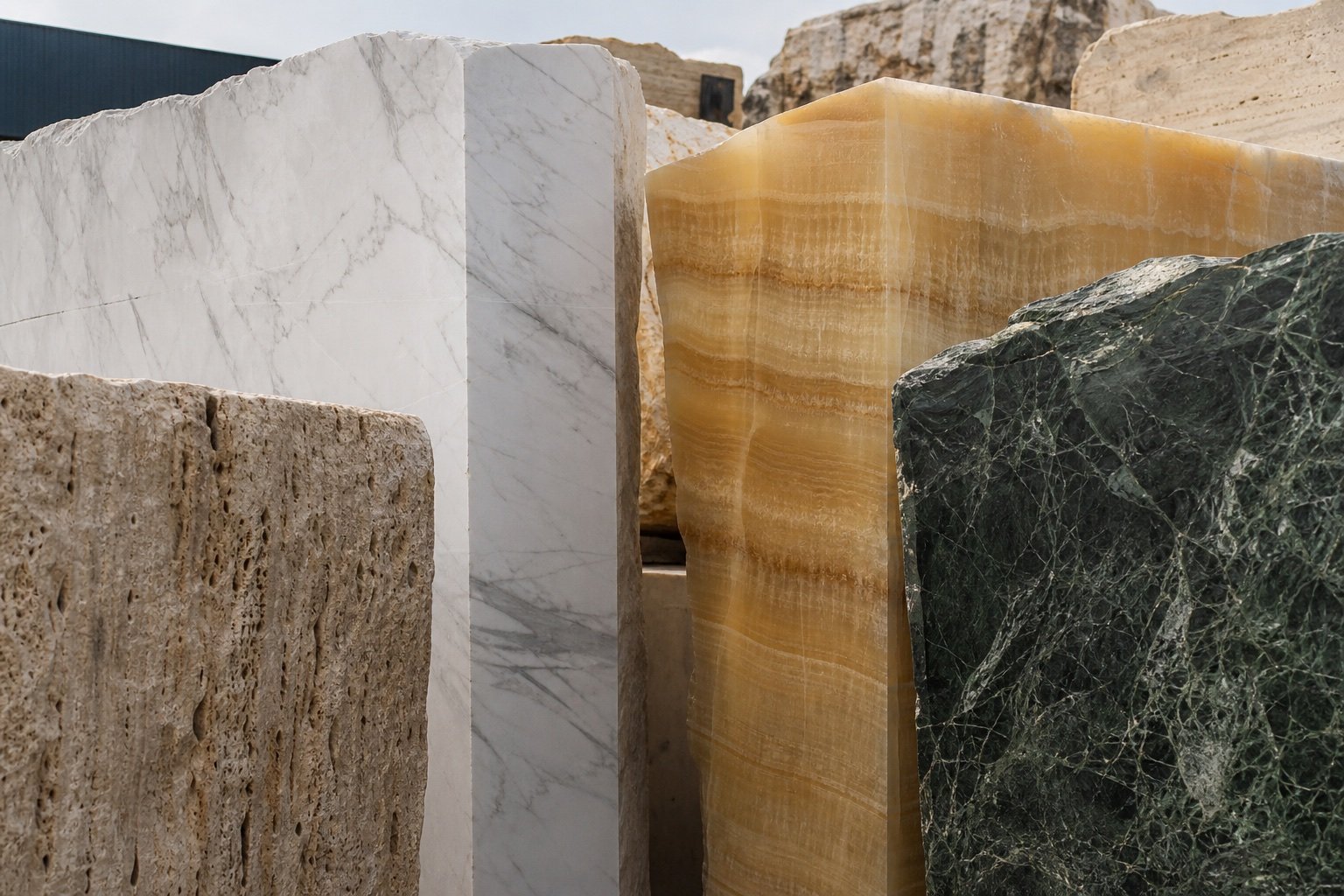
Compare marble, onyx, travertine and other stone directions by appearance, fabrication needs and intended application—not by color alone.


Material is part of the design
Material selection affects visual consistency, achievable details, maintenance expectations, packing and price positioning. We review the stone together with the product form and intended environment, then clarify the natural variation a buyer should expect.
Material in context
Veining, translucency, finish and fabrication all change the final object. These studies show the questions behind a useful material selection.
Representative material imagery — final stone selection depends on current availability and approved references.



Capabilities
Review base tone, movement, contrast and how much variation suits the collection.
Consider thickness, edge details, joins, weight and the fabrication required by the form.
Choose a finish that supports the desired appearance and intended use of the product.
Agree an approval reference and practical tolerance for naturally occurring differences.
How it works
Define the product, placement and performance expectations.
Shortlist stones that support the desired visual language.
Review current material examples or a product sample.
Agree the acceptable variation and inspection approach.
An honest natural material
Photography can guide selection, but screen color and a single sample cannot represent every piece. Commercial approval should define a reasonable range rather than expect exact duplication.
Discuss your requirements →Frequently asked
No. Natural stone varies in tone, pattern, inclusions and veining. A suitable approval range should be agreed for the collection.
Yes. Suitability, current availability, product construction and quantity must be reviewed before it is confirmed.
That depends on the stone, form, visual intent and use environment. Share the application so the finish can be considered in context.
Start the conversation
Share your estimated quantity, destination and requirements. We will reply with the information needed to define the next step.
Request information